


Looking through any films or historical illustrations, you might have noticed the rulers (pharaohs) of Ancient Egypt depicted with different false beards.
This raises a logical question: why did the pharaohs need false beards and was there any hidden meaning in all this?
Many historians have made some very interesting assumptions, versions and guesses regarding the wearing of false beards by the pharaohs. However, we will tell you more about everything in our new article:
A short excursion into the history of shaving culture in Ancient Egypt
Hair in Ancient Egypt has a rather extraordinary and very interesting story about which it is worth telling in a little more detail before touching on the pharaohs’ false beards.
Obviously, during the pre-dynastic period of Egypt, men often wore mustaches and beards. This can be easily seen, for example, in the images of Narmer’s palette or on the statue of Tsarevich Rahotep (the son of Pharaoh Sneferu), who is depicted with a trimmed mustache and resembles Freddie Mercury. Also, images with bushy beards were often found by archaeologists on the masks of the mummies of Egyptian rulers during the First Transitional Period and the Middle Kingdom.
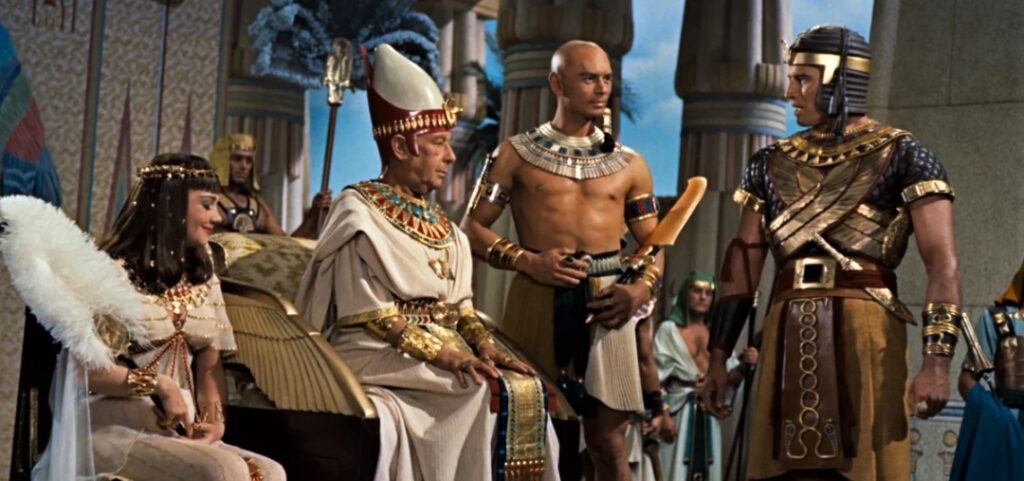
The earliest shaving tools among the Egyptians appear to have been sharp flint blades, usually inserted into a wooden handle. With the development of metallurgy in the 2nd millennium BC. e., the Egyptians began to actively use thin copper razors, curved in the shape of a crescent, and from the time of the Middle Kingdom, bronze trapezoidal razors began to appear, which were discovered by archaeologists in Cretan Knossos. Later (approximately in the 1st millennium BC), razors began to be created mainly from iron. Obviously, this highly developed shaving culture quickly led to some of the world’s first hairdressers to learn the craft, visit aristocratic homes and earn their living, but also work for ordinary clients in the open air.
For example, it is well known that the Egyptian priests removed absolutely all hair on their bodies, including eyebrows and eyelashes with shaving tools, in order to be able to take their place according to religious customs (since they believed that hairiness was the lot of animals and dirty beggars), and women tried to remove hair only from the most important areas, the bikini area, armpits and legs, namely by means for depilation in the form of honey and oil pastes, not only for hygiene, but also for beauty (poorer women used arsenic and lime for these purposes, namely this method will come into use in European countries in the distant future).
Back to the topic of the article: Why did the pharaohs wear fake beards?
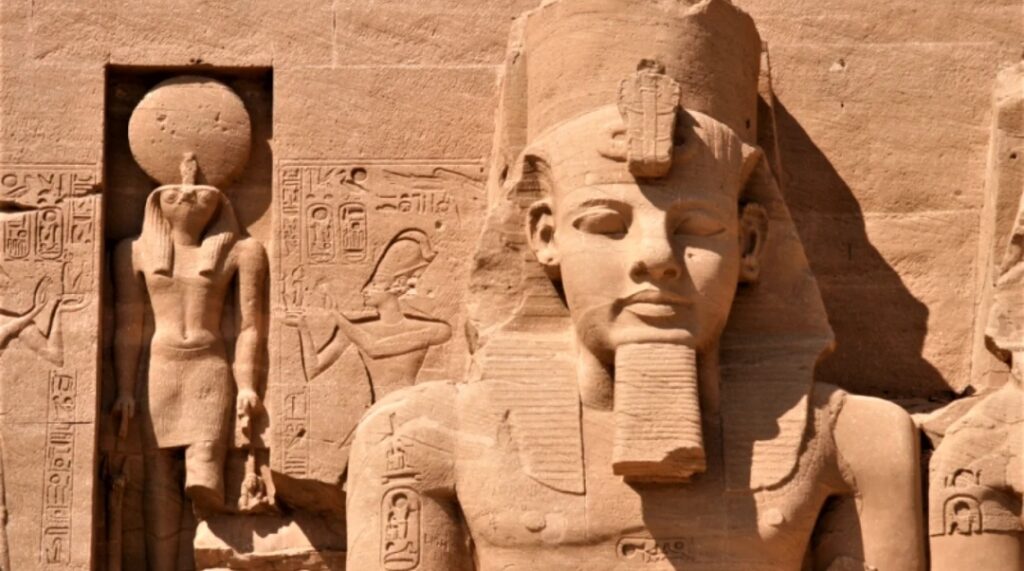
Upper class Egyptians often wore wigs with tassels or beads made of aromatic resin, which were made from wool or cut hair, and could also wear short fake beards. Inhabitants of the lower class, by the way, could also adorn themselves with artificial wigs, but only the pharaoh had the right to wear a long false beard, and after his death, only at the moment of mummification they put on a rounded thin braided beard intertwined with gold threads, like the god Osiris, and also made statues and engraving with just such a beard.
Why only Pharaoh?
Everything is very simple: the beards of the pharaohs in ancient Egyptian art, regardless of their context, have always been the personification of their divine nature, although, of course, not all male gods wore such beards.
Some historians believe that Pharaoh’s fake beard symbolized a ray of sun! And since the pharaoh himself was considered a god, the son of the sun god Ra, the beard of golden threads could signal the divinity that the young pharaoh emits with his face during any solemn events. As you know, horizontal stripes with ripples can often be seen in the reflection of the sun in water. This may explain why pharaohs’ fake beards often have slightly sloping stripes rather than horizontal ones, and also why it is identical to the beard of the god Osiris.
The notion that the pharaoh wore a fake beard with long horizontal stripes to resemble the real sun shining over the Nile is indeed a very common opinion of historians! Indeed, in accordance with this religious formula, the pharaoh expressed his status as a living god, wearing in certain cases a fake beard, secured with a rope.